

Adaptive Heat. Every Mechanism. One Platform.
ThermaCycle® is ERG’s closed-loop, recirculating groundwater heating platform for low to mid temperature in situ remediation. Heat and amendments share one loop, so a single skid can run biological, chemical and physical mechanisms in sequence as the site moves toward closure.
One platform. Seven mechanisms. No system redesigns.
The same skid and wellfield deliver whichever mechanism the remedial trajectory needs next. That makes ThermaCycle® the backbone of ERG’s thermally enhanced combined remedies.
- Heat-enhanced biodegradation
- Thermally enhanced desorption and extraction
- In situ chemical oxidation and reduction
- Biological amendment and bioaugmentation
- Accelerated hydrolysis of susceptible VOCs
- NAPL mobilization
- Co-solvent and surfactant flushing
Configured to the mechanism.
Heat-enhanced bioremediation
A 30 to 40 °F temperature boost holding the subsurface near 90 to 100 °F, at expanded flow across large plume footprints, with electron donors and nutrients dosed inline.
Hydrolysis and free product recovery
5 to 20 gpm at a temperature delta of up to 105 °F, for VOCs that hydrolyze with heat and for recoverable product.
DNAPL mobilization
130 to 170 °F injection at a temperature lift of up to 105 °F, with co-solvent and surfactant dosing to mobilize and recover dense non-aqueous phase liquid.
Temperature is the missing variable at stalled bioremediation sites.
Gentle, controlled heat turns an underperforming microbial community into an active one. ThermaCycle® holds the target zone in the range where the site’s degraders work fastest.
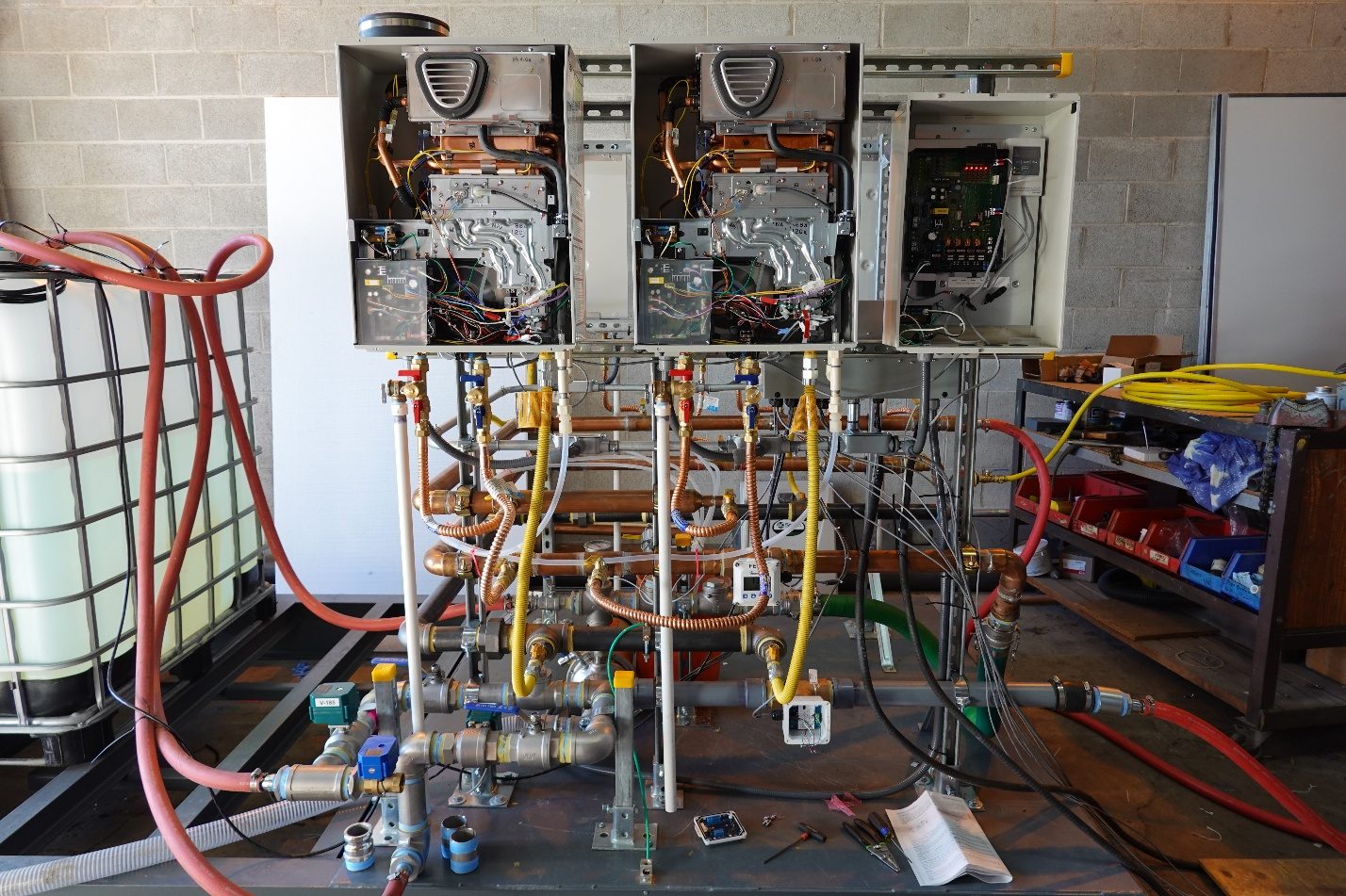
Read: Wake the microbesShipped piped, wired and tested.
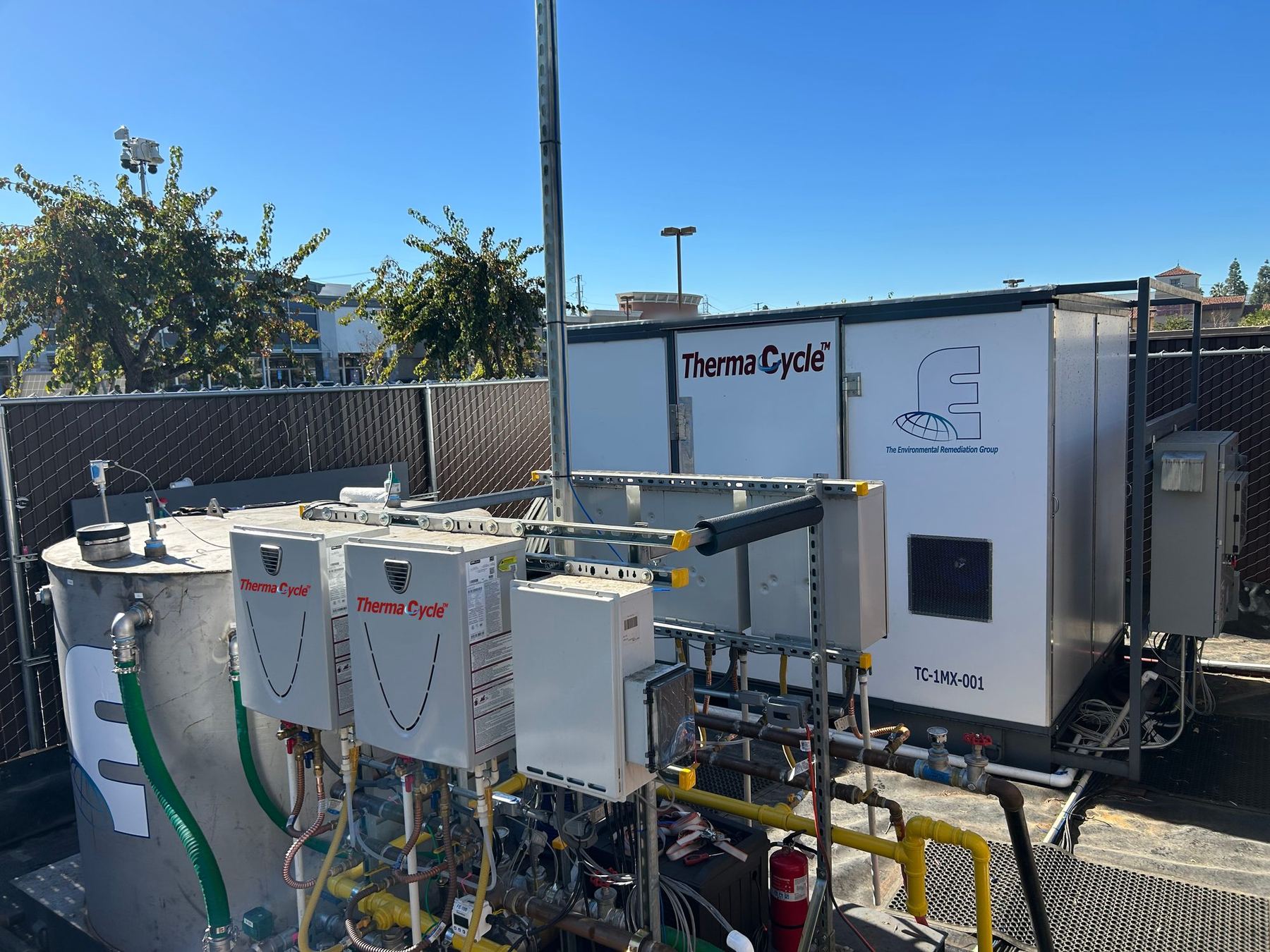
- All-metal 8.5 × 12 ft enclosure with crane lift rigging
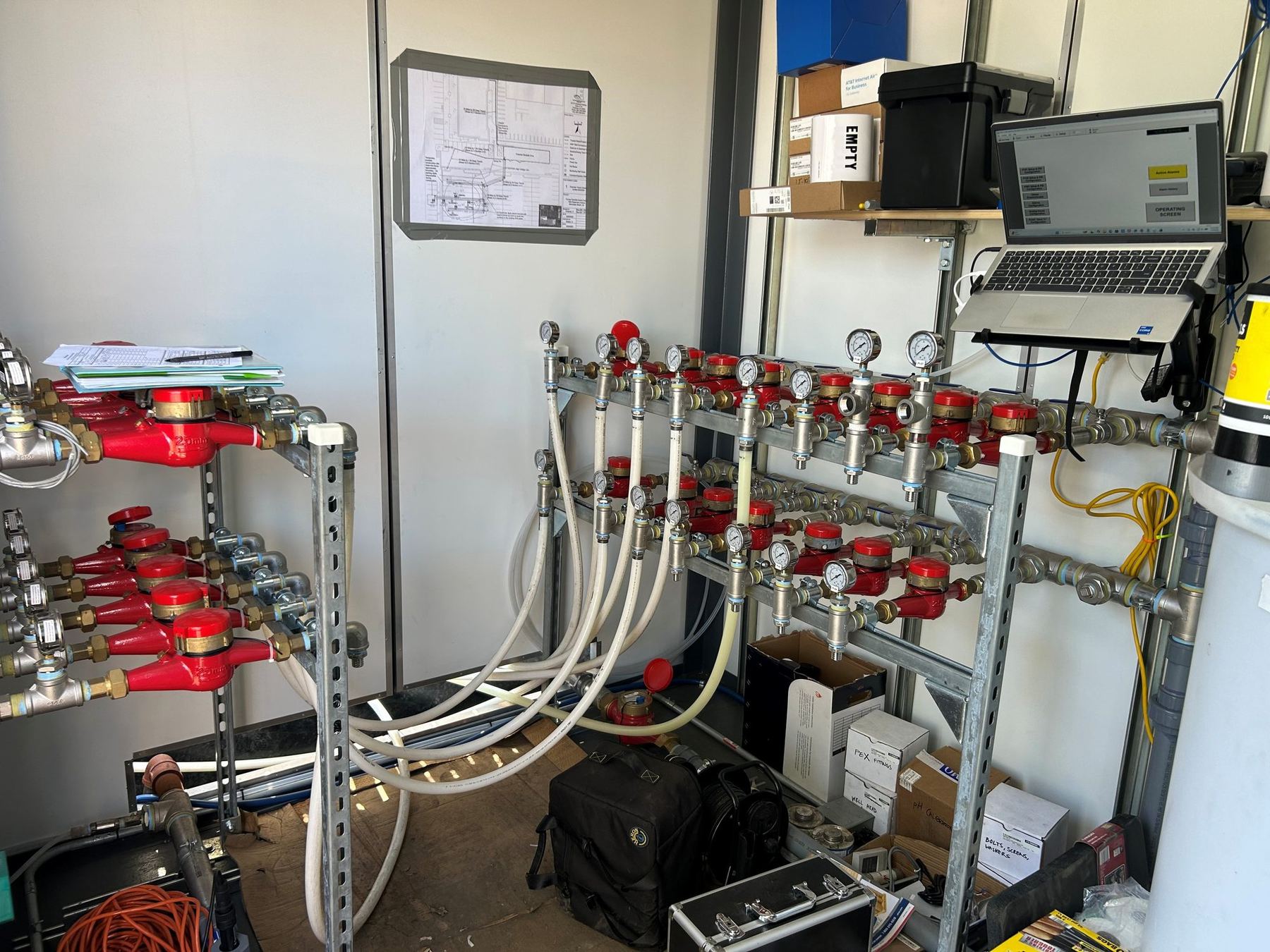
- Allen-Bradley PLCs on an Ignition SCADA backbone, with real-time telemetry, remote control and automated alarms
- Magnetic flow meters, pressure and temperature transducers, and onboard data logging
- Inline dosing ports for surfactants, co-solvents, electron donors and nutrients
PCE and TCE DNAPL at 110 to 125 ft, beneath a working parking lot.
At an active commercial site in Southern California, Phase 1 focused on the most heavily impacted DNAPL source zone to confirm the optimal operating parameters and treatment strategy, with thermal front propagation of about 2 ft per day at a sustained injection temperature of about 160 °F.
Once the heat front arrived, mass removal rose about 2,000% over the pre-heating baseline, recovering hundreds of pounds of mass in the dissolved phase and hundreds more as recovered DNAPL.
When removal began to fall, combined heat and surfactant brought it back to about 2,000% of baseline, polishing residuals in the Phase 1 area.
Underway now: treatment expands to the larger deep DNAPL source zone, with 6 to 10 additional wells coming online in the fourth quarter of 2026.
Once DNAPL removal and sorbed soil mass reduction are complete, ThermaCycle® shifts to lower temperature heat-enhanced bioremediation of the much larger dissolved phase plume.
Have a contaminated site? Let’s engineer the closure.
Send us the basics: contaminants, depth, geology and the cleanup goal. A principal will review the site and tell you whether heat fits, which approach, and what a full evaluation involves.