
High Temperature. Low Carbon. No Compromises.
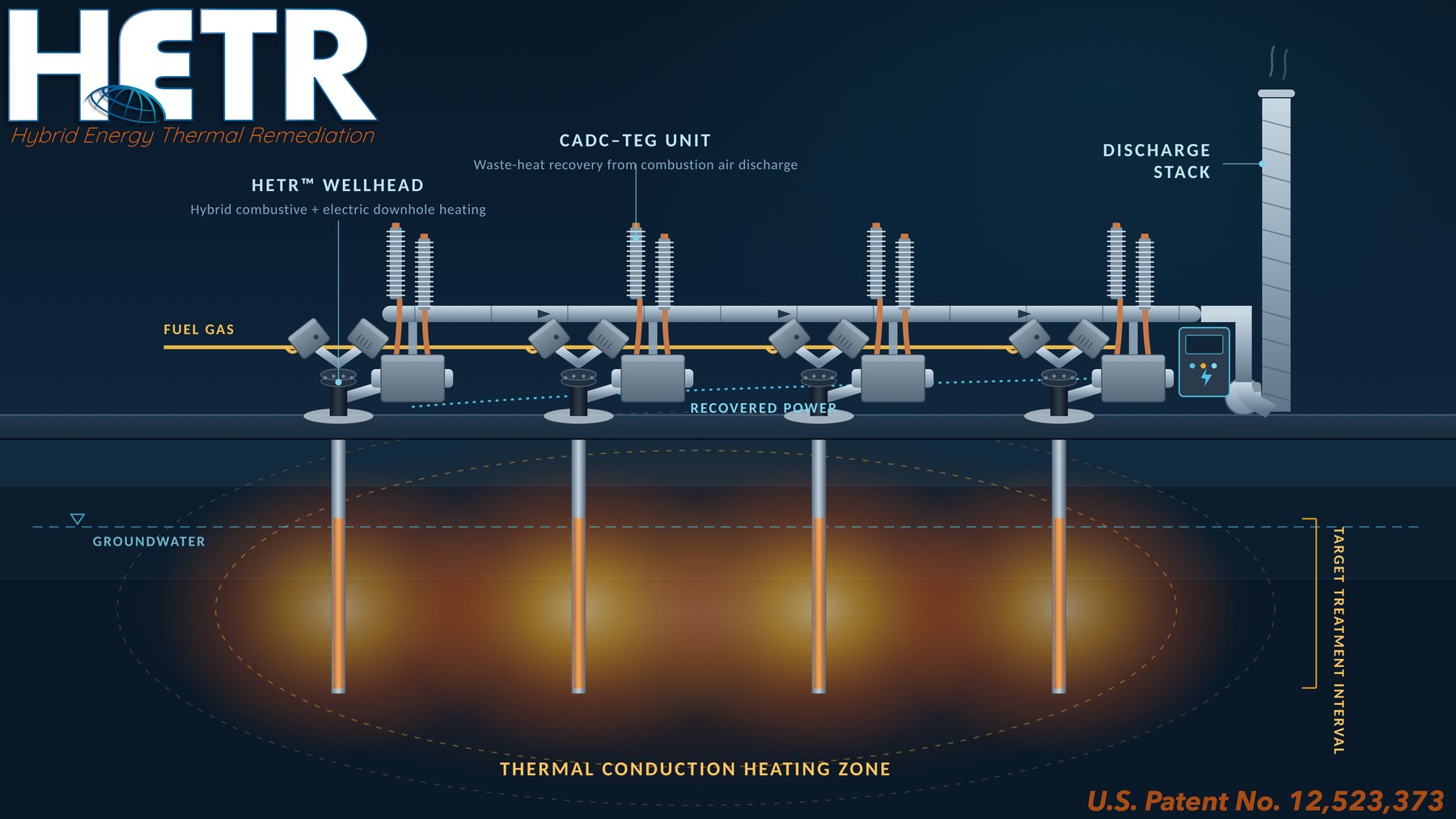
HETR™ (Hybrid Energy Thermal Remediation) is ERG’s patented thermal conduction heating platform. It heats the subsurface with multiform energy from combustive and/or electrical sources, so the energy supply fits the site instead of the site fitting the energy supply.
Thermal conduction heating, without the usual constraints.
Conventional TCH depends on large electrical services or a single fuel supply. HETR™ was designed so that power availability, carbon and site access stop dictating whether high temperature treatment is possible.
Multiform energy
HETR™ heats with multiform energy from combustive and/or electrical sources. It runs grid connected, on partial grid power, or fully off grid, so it can be deployed where conventional electric TCH would need a new utility service.
Thermoelectric energy recovery
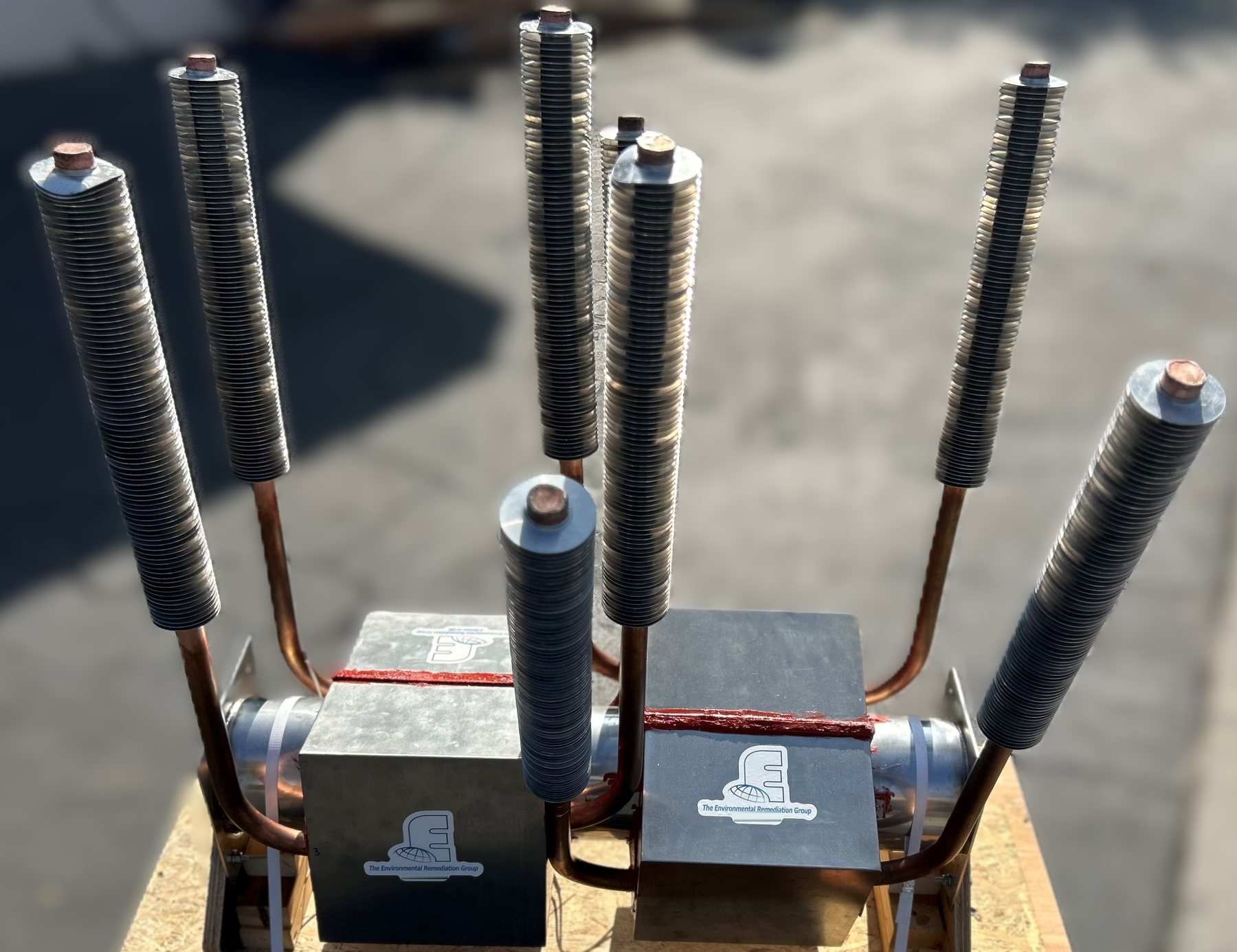
Each HETR™ well generates 100 to 500 W of electricity around the clock while it heats. That power offsets grid demand and, paired with solar, supports off grid operation. The system earns back energy as it remediates.
4D heat control
Heat input can be differentiated along and across wells, boosted at discrete depth intervals, or displaced to target a deep zone without heating everything above it.
Infrastructure light
A smaller utility footprint and less disruption for operating facilities, constrained urban sites and remote locations where conventional TCH cannot go.
Field proven. Patented. Scaling now.
HETR™ operates at full scale today. Heater wells run with soil vapor extraction to treat high temperature source zones, and the platform is scaling to multi-hundred-well wellfields on 2026 projects.
Example of a completed HETR™ project: Carson Plaza case study
Mechanisms above the boiling point.
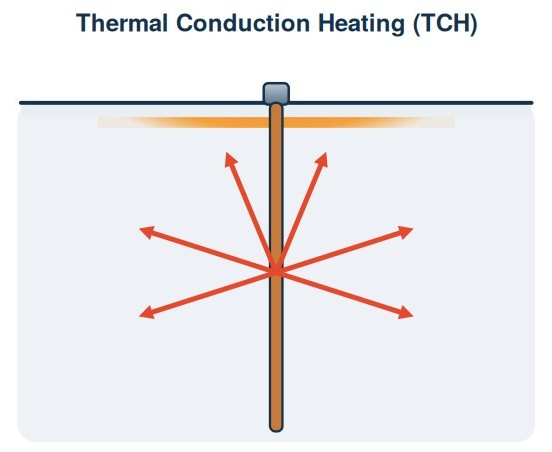
Above 100 °C, water and volatile contaminants boil off and are captured by vapor extraction. Higher temperatures desorb and volatilize SVOCs, and in the upper range contaminants pyrolyze, degrade and mineralize in place.
- Volatilization and steam stripping, near 100 °C
- SVOC desorption and volatilization, 100 to 200 °C
- Pyrolysis, 200 to 300 °C
- Degradation and mineralization, toward 400 °C
Have a contaminated site? Let’s engineer the closure.
Send us the basics: contaminants, depth, geology and the cleanup goal. A principal will review the site and tell you whether heat fits, which approach, and what a full evaluation involves.