
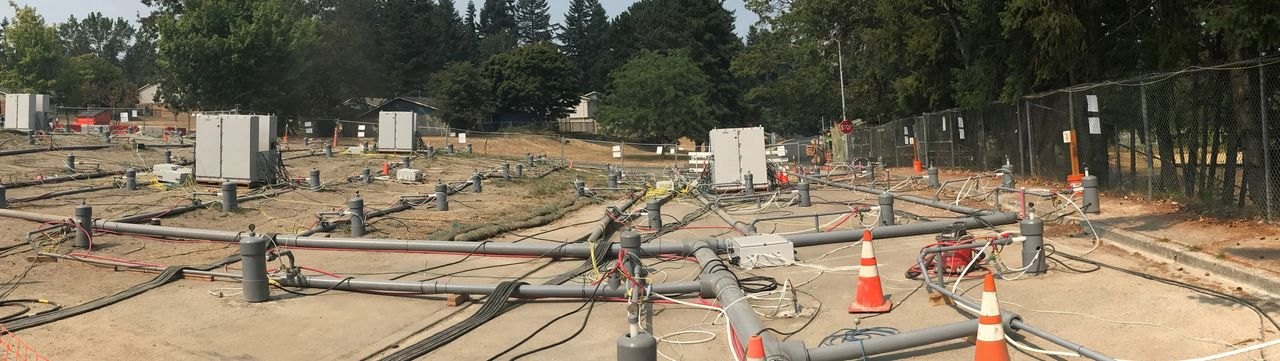
Thermal remediation has been one of the most reliable tools for addressing complex contaminated sites for more than two decades. Yet it is often misunderstood or oversimplified. “Thermal” is not a single technology, temperature, or treatment pathway—it is a family of engineered approaches that apply energy to the subsurface to unlock contaminant removal mechanisms that conventional remedies cannot reliably achieve.
At The Environmental Remediation Group (ERG), thermal remediation is not just about applying heat. It is about delivering the right form of energy, at the right temperature, in the right configuration, aligned with site conditions and remedial objectives.
What Is Thermal Remediation?
Thermal remediation involves applying energy to the subsurface to elevate temperatures within a contaminated zone, accelerating physical, chemical, and biological processes that enable contaminant removal or destruction.
Depending on the technology and operating temperature, heating can:
- Volatilize contaminants for controlled extraction and treatment
- Accelerate chemical reactions such as hydrolysis, mineralization, or decomposition
- Reduce contaminant viscosity and interfacial tension
- Increase solubility and desorption
- Enhance biological activity and biodegradation
While many thermal remedies operate at or above the boiling point of water, ERG designs systems across a wide temperature spectrum—from low-temperature heat-enhanced treatment to high-temperature source-zone destruction—based on site-specific needs.
Thermal Technologies
ERG designs, builds, and operates the full range of in situ thermal remediation technologies, selecting and configuring each system to match geology, contaminant chemistry, infrastructure constraints, and regulatory goals.
Thermal Conduction Heating (TCH)
Thermal Conduction Heating applies heat through heaters installed in wells, allowing energy to propagate conductively through soil and rock. Because it does not rely on groundwater movement or permeability, TCH is applicable across nearly all geologic settings.
ERG deploys TCH using electric, fuel-based, and hybrid energy configurations, including proprietary HETR™ (Hybrid Energy Thermal Remediation) systems designed to deliver high temperatures efficiently and reliably for aggressive source-zone mass removal.
Electrical Resistance Heating (ERH)
ERH heats the subsurface by passing electrical current between electrodes installed in a grid pattern. Electrical resistance within the soil generates heat directly in the formation.
ERH is particularly effective in saturated formations and fine-grained soils, with operating temperatures typically approaching the boiling point of water.
Steam-Enhanced Extraction (SEE)
SEE involves injecting steam into permeable formations, where it condenses and transfers heat to surrounding soils. As steam zones expand, contaminants are mobilized and recovered through vapor and liquid extraction systems.
SEE is often deployed in permeable sands and gravels and can be combined with TCH or ERH to address stratigraphic variability.
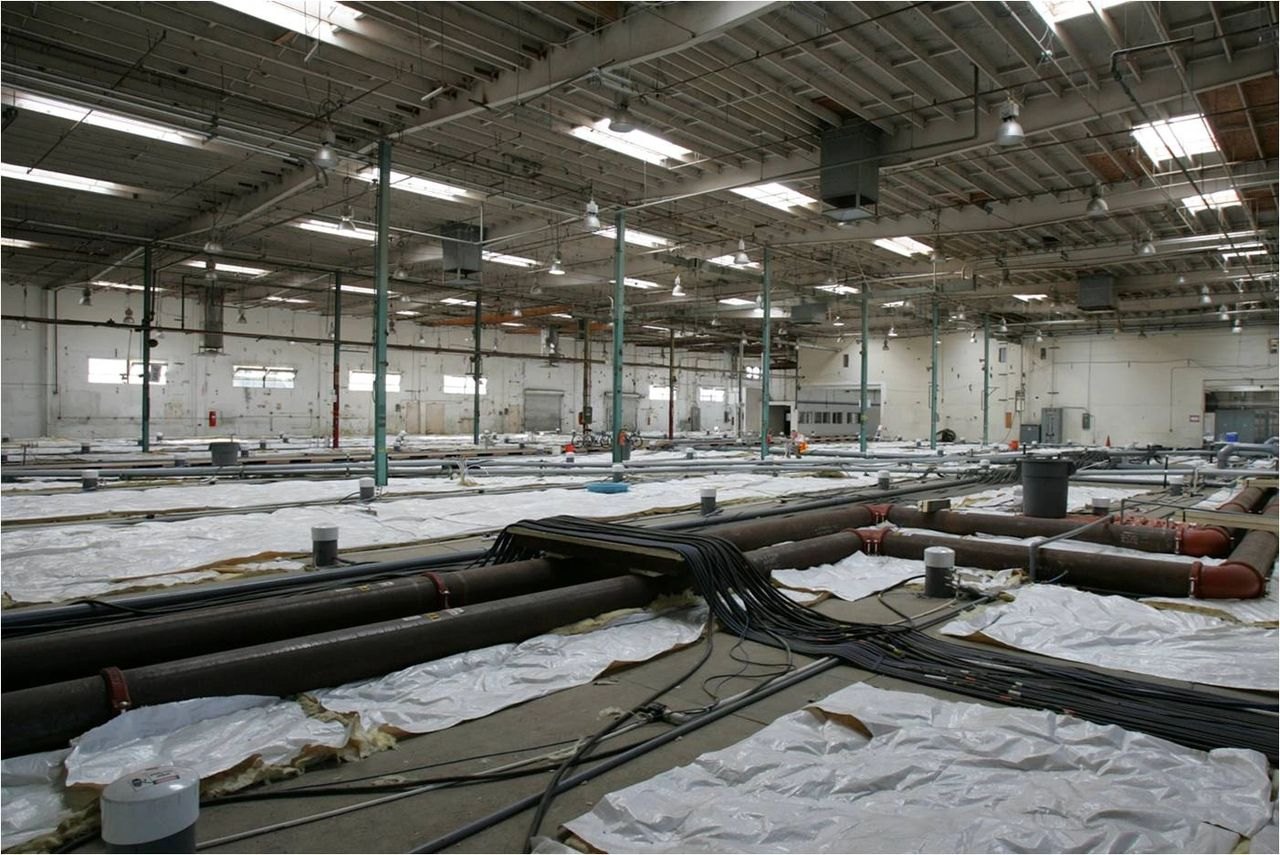
What Contaminants Can Thermal Remediation Address?
Thermal remediation is one of the most versatile remedial approaches available for sites impacted by:
- VOCs and CVOCs
- DNAPL, LNAPL, and Concentrated source zones
- Petroleum hydrocarbons
- SVOCs and PAHs
- Coal tar and MGP residuals
- PCBs, dioxins, and other high-boiling-point compounds
- PFAS, PFOA, and everything in between
Higher-temperature systems such as TCH are uniquely capable of treating recalcitrant, high-boiling contaminants, while lower-temperature systems can be optimized to enhance biological and chemical treatment pathways.
Thermal Remediation as a Standalone Remedy—and Beyond
At ERG, thermal remediation is most often deployed as a standalone remedy, selected for its ability to deliver predictable, aggressive mass removal across a wide range of contaminants and geologic settings. Thermal systems are designed to function independently and achieve cleanup objectives without reliance on secondary technologies or follow-up treatments.
Where site conditions or remedial objectives warrant, however, thermal remediation can also serve as the backbone of a strategic, combined remedy, integrated spatially and temporally across source areas, plume impacts, and the overall remedial trajectory. Technologies such as ERG’s ThermaCycle® can complement HETR™ thermal conduction heating (TCH) source-zone remediation—enabling a whole-plume treatment strategy that maximizes efficiency and improves overall return on remedial investment.
ThermaCycle®: Expanding What Thermal Can Do
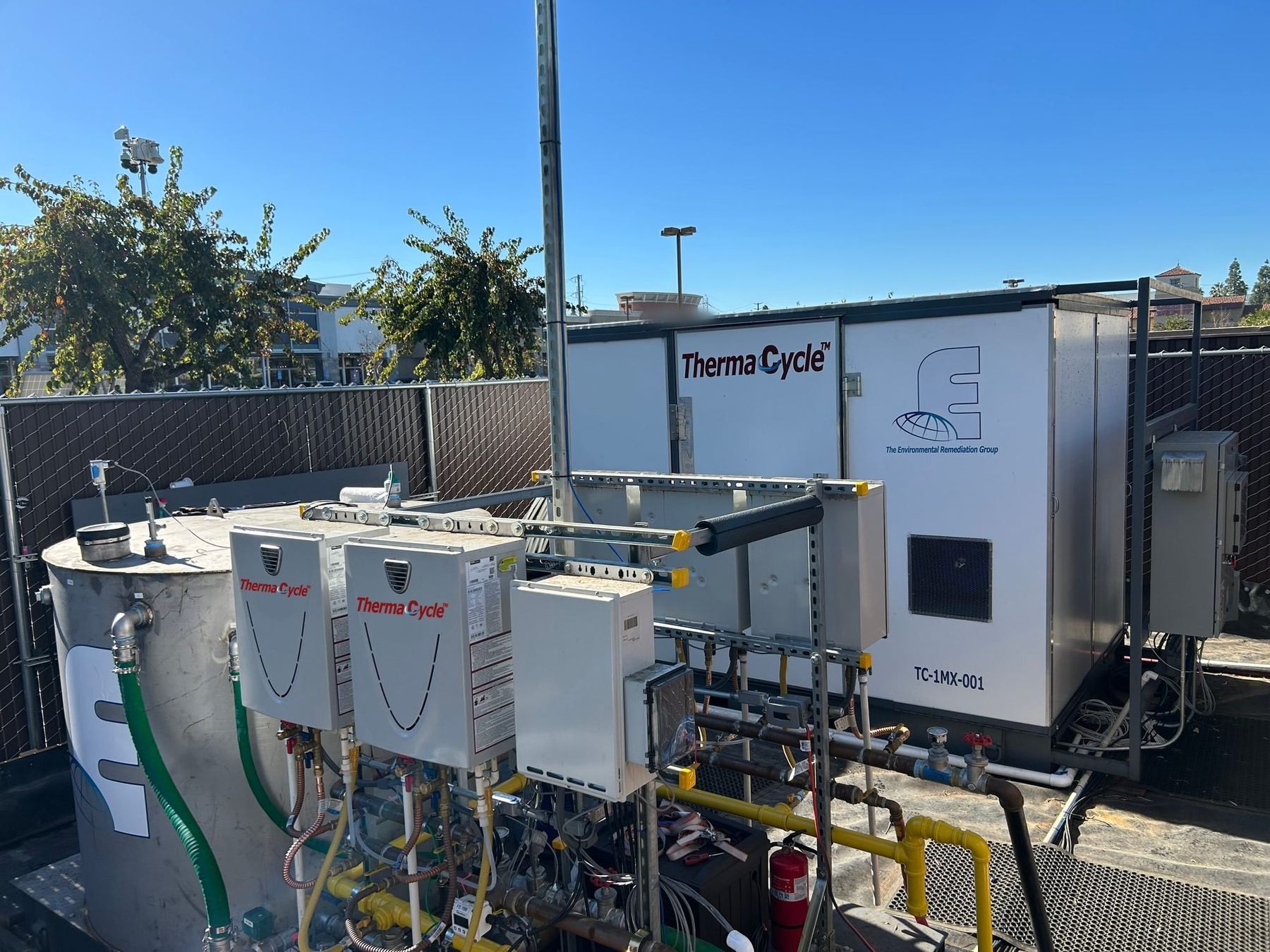
ThermaCycle® is ERG’s low- to mid-temperature, closed-loop groundwater heating platform—engineered to apply heat intentionally below volatilization and boiling thresholds. Operating typically between 90 and 150 °F, ThermaCycle® activates a broad range of heat-enhanced remediation mechanisms within a single adaptable system.
Through inline dosing and mixing infrastructure, ThermaCycle® supports:
- Heat-enhanced bioremediation
- Heat-accelerated hydrolysis
- Heat- and chemically enhanced oxidation or reduction (ISCO or ISCR)
- Surfactant- and co-solvent-enhanced NAPL mobilization and recovery
Because heat, hydraulics, and amendments are delivered through a unified closed-loop architecture, treatment mechanisms can be prioritized, blended, or sequenced as conditions evolve—without redesigning the system or adding surface infrastructure.
Designed for Real Sites, Real Constraints
One of thermal remediation’s greatest strengths is its applicability across diverse geologic settings:
- Low-permeability clays, silts, and tills
- Permeable sands and gravels
- Fractured or porous bedrock
- Sites beneath buildings, slabs, and active infrastructure
ERG’s experience across hundreds of thermal designs allows systems to be engineered not just for subsurface performance, but for constructability, operability, and regulatory acceptance.
The Bottom Line
Thermal remediation remains one of the most predictable, powerful, and reliable tools for addressing complex contaminated sites. When designed and implemented correctly, it can deliver cleanup outcomes that other remedies cannot—often faster and with greater certainty.
At ERG, we don’t just apply heat.
We engineer thermal systems that fit the site, the contaminants, and the cleanup goals—whether as a standalone remedy or as the backbone of a strategically integrated approach.
If you’re evaluating thermal remediation for a challenging site, ERG can help determine whether it’s the right solution—and how to deploy it to its full potential.