
At The Environmental Remediation Group (ERG), we believe that great remediation starts with an informed and defensible basis of design. While modeling tools, historical data, and peer-reviewed literature are essential, they cannot always capture the site-specific complexities that ultimately govern remediation performance.
That is where targeted bench-scale testing comes in.
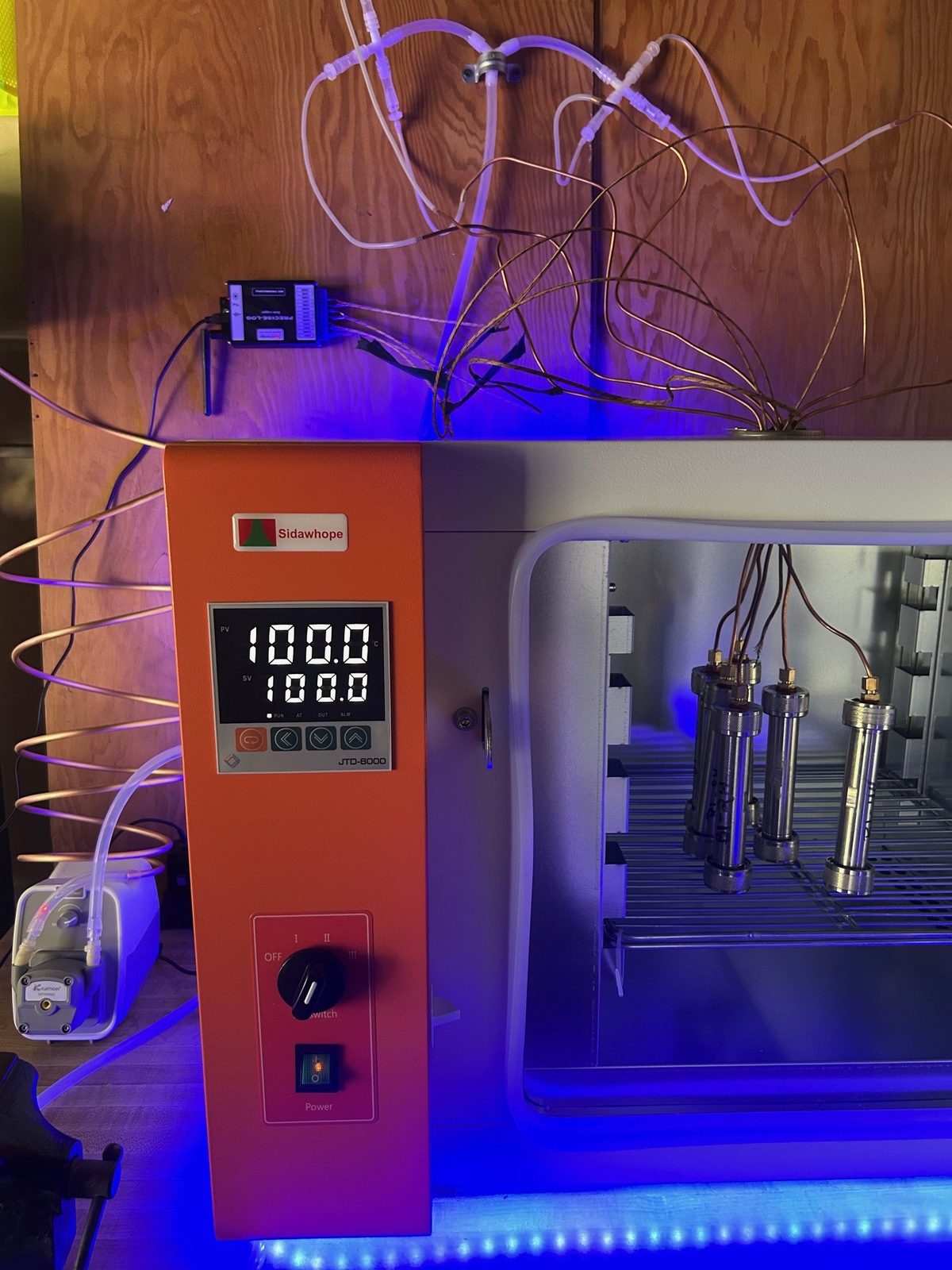
Bench-scale testing bridges the gap between theory and field execution. It allows us to directly observe how site soils, contaminants, and geotechnical conditions respond to heat under controlled conditions before committing to full-scale implementation. These programs are designed and executed by engineers and scientists who understand in situ thermal remediation from the ground up, ensuring that test results translate directly into smarter field designs.
Why Bench-Scale Thermal Testing Matters
Every site is different. Soil mineralogy, moisture content, contaminant composition, and subsurface structure all influence how heat moves through the ground and how contaminants respond. ERG routinely develops and executes advanced bench-scale heating trials and analytical testing programs to evaluate these factors before heaters ever go into the ground.
Our testing provides critical insight into:
- Geotechnical and stability considerations under thermal loading
Evaluating how soils respond to heating, including strength, consolidation, and deformation behavior. - Site-specific treatment thresholds for contaminant removal
Identifying the temperatures required to mobilize, volatilize, or degrade contaminants effectively. - NAPL and VOC behavior under elevated temperatures
Observing phase changes, vapor generation, and removal mechanisms unique to each site. - Technology validation prior to field-scale deployment
Confirming that the selected thermal approach will perform as intended before construction begins.
What a Typical Bench-Scale Setup Includes
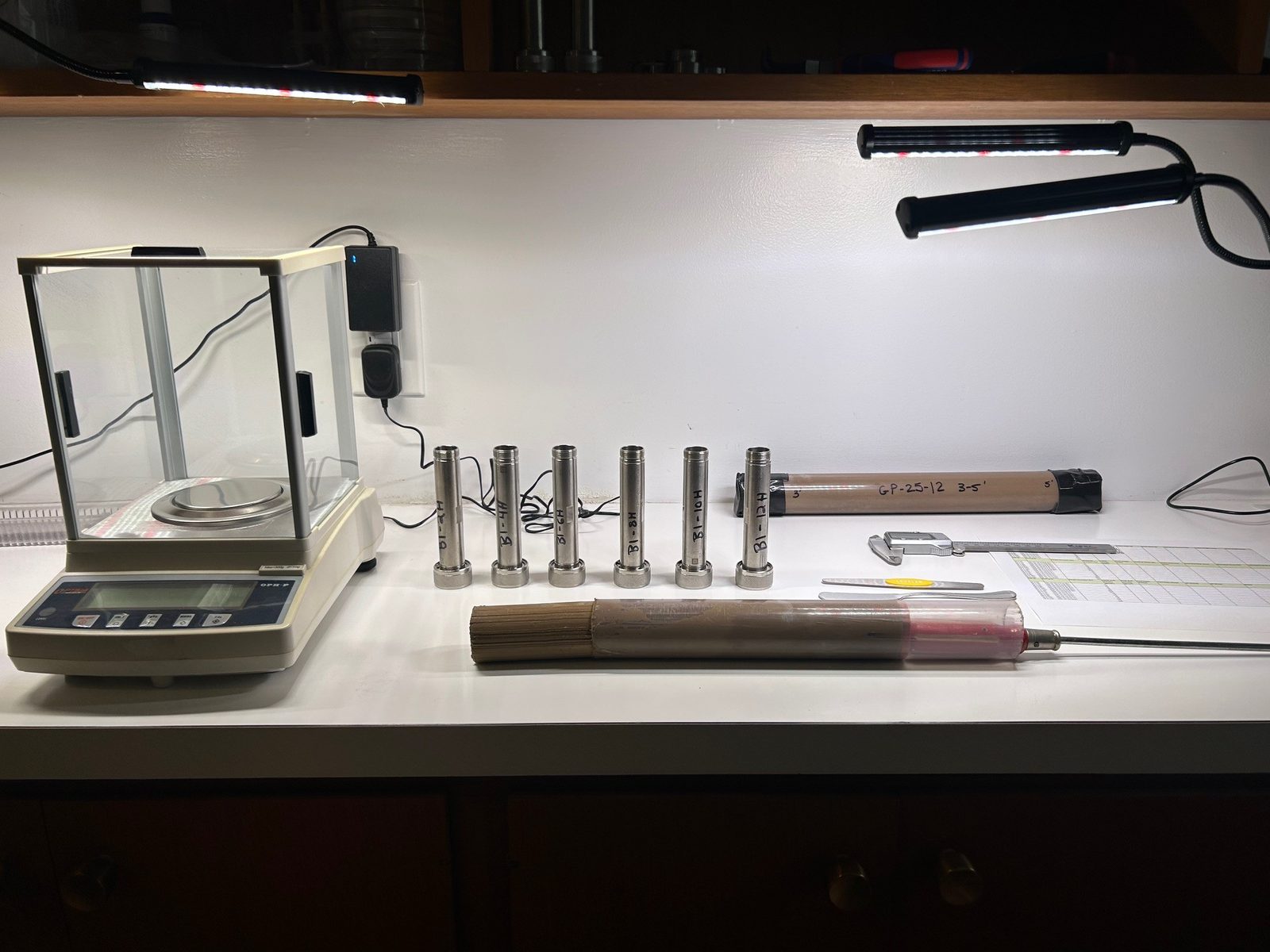
ERG’s bench-scale programs are tailored to project objectives, but most testing platforms incorporate:
- Controlled soil column heating, extraction, and vapor conditioning to replicate subsurface conditions
- High-resolution monitoring of temperature gradients and vapor-phase dynamics
- Pre- and post-treatment analysis of soils and target compounds to quantify treatment effectiveness
Because these tests are designed by the same team that performs system design and field implementation, results are immediately actionable—not academic.
From Data to Design Confidence
ERG’s in-house thermal testing capabilities give our clients a head start. Bench-scale data reduce uncertainty, refine system sizing, validate technology selection, and ultimately improve performance and predictability in the field.
Whether you are evaluating ERG’s patented Hybrid Energy Thermal Remediation (HETR™) technology, considering a low-to-mid temperature in situ thermal remediation application using our proprietary ThermaCycle® platform, or pursuing a combined remedy approach, our designs always begin with quality data.
And when bench-scale testing makes sense, we use it to ensure the heat is applied smarter—not just harder.
Curious how lab testing can strengthen your remediation strategy? Let’s talk.